High quality, Well-deserved reputation, First-class service


PRODUCTS
CONTACT INFO
Email: sales01@everluckymachinery.com
Whatsapp: +86-13722852356
Wechat: ff0082006
Sype: 297338284@qq.com
Tel: +86-317-5660915
Fax: +86-317-8330026
Address: Botou city Hebei province

TD bucket elevator
TD bucket elevator consists of hoist upper and lower sprocket, belt, bucket, screw, inlet and outlet, box, motor reducer, etc. It has large conveying capacity, high lifting height, stable and reliable
Category
Contact Info
sales01@everluckymachinery.com
Product Details
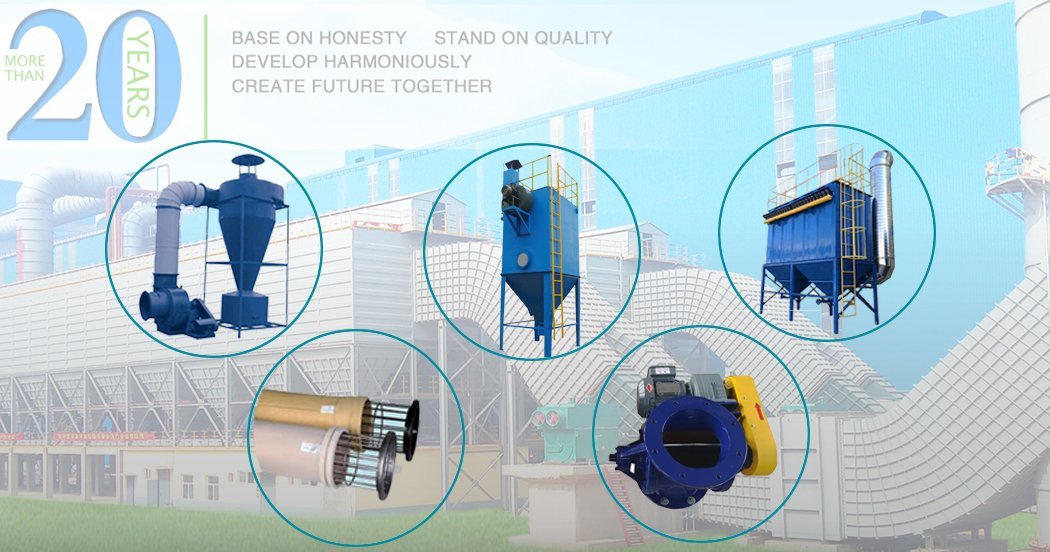

TD bucket elevator consists of hoist upper and lower sprocket, belt, bucket, screw, inlet and outlet, box, motor reducer, etc. It has large conveying capacity, high lifting height, stable and reliable operation, and long service life. Advantages: Its main performance and parameters conform to JB3926----85 "Vertical Bucket Elevator" (the standard is equivalent to international standards and foreign advanced standards), and the traction ring chain meets MT36----80 "Mining "High-strength ring chain", the hoist is suitable for conveying powdery, granular and small pieces of non-abrasive and low-friction materials, such as: coal, cement, stones, sand, clay, ore, etc. Because the traction mechanism of the hoist is a circular chain, it allows the transport of higher temperature materials (material temperature does not exceed 250 °C). The speed of the hoist cannot exceed 85 revolutions per minute. If the speed is too high, the discharge will be unclean, and the bucket will have surplus material. The normal conveying height of bucket elevators of ordinary belts is generally not more than 20 meters, and the conveying height of belt rope elevators of steel cord cores is up to 80 meters.
How it works
The TD type bucket elevator consists of an operating part (hopper and traction tape), an upper section with a drive roller, a lower section with a tension roller, an intermediate casing, a drive device, a backstop brake device, etc. It is suitable for transporting bulky, semi-abrasive and loose materials with loose density ρ<1.5t/m3 powdery, granular and small pieces, such as coal, sand, coke, cement, crushed ore, etc. TD bucket elevator structure: Transmission TD bucket elevator transmission has two forms with YZ reducer ZQ (or YY) reducer. YZ-type shaft reducer is directly installed on the shaft shaft head, eliminating the need for a drive platform, coupling, etc., to make the structure compact, light weight, and its inside with a special roller backstop, reliable backstop. The reducer has low noise, stable operation, and floats with the spindle to eliminate installation stress.
Installation:
1. The bucket elevator must be firmly installed on a solid foundation. The surface of the raft foundation should be flat and horizontal, ensuring that the bucket elevator will meet the vertical requirements after installation.
The higher height bucket elevators should be attached to the adjacent buildings (such as silos, workshops, etc.) at appropriate positions in the middle and upper cabinets to increase their stability. When installing, install the lower part first, fix the anchor bolt, install the middle casing, and then install the upper casing. The casing is installed successfully, correcting the verticality. In the straight line measurement with lead above and below the full height, the error should be less than 10mm. The up and down axis should be parallel, and the axis line should be in the same plane.
When the height of the lower bucket elevator is installed, all the upper, middle and lower casings can be connected and properly grounded at the ground plane, and then the whole crane is directly fixed on the raft foundation.
2. After the enclosure is installed, install the chain and hopper. U-bolts for connecting hoppers are both chain joints and hoppers. The U-bolt nut must be tightened and securely secured.
3. After the chain and hopper are installed, perform proper tensioning.
4. Add the appropriate amount of oil and butter to the reducer and bearing housing. The reducer is lubricated with industrial gear oil. In the bearing seat, calcium-based or sodium-based butter can be used.
5. After the completion of the installation should be empty test run. Air operation should pay attention to: can not be reversed, there can be no bump phenomenon. The air running is not less than 2 hours, there should be no overheating, the bearing temperature rise does not exceed 250C, the temperature rise of the reducer does not exceed 300C. After 2 hours of empty operation, everything is normal and a load test can be performed. The feeding should be uniform during the test run with load, to prevent overfeeding, and to cause a “boring car” due to the blockage of the lower part.
Application:
Shallow hopper: transport moisture, easy to block, difficult to throw the material. Such as wet sand, wet coal and so on.
Deep hopper: transport dry, loose, easy-to-throw material. Such as cement, coal, gravel, quartz sand, etc.

| Model | TD160 | TD250 | TD315 | TD400 | ||||||||||||
| Hopper type | Q | H | ZD | SD | Q | H | ZD | SD | Q | H | ZD | SD | Q | H | ZD | SD |
| Capacity(m3/h) | 5.4 | 9.6 | 9.6 | 16 | 12 | 22 | 23 | 35 | 17 | 30 | 25 | 40 | 24 | 46 | 41 | 66 |
| Width (mm) | 160 | 250 | 315 | 400 | ||||||||||||
| Hopper size(L) | 0.5 | 0.9 | 4.2 | 1.9 | 1.3 | 2.2 | 3.0 | 4.6 | 2 | 3.6 | 3.8 | 5.8 | 3.1 | 5.6 | 5.9 | 9.4 |
| distance(mm) | 280 | 350 | 360 | 450 | 400 | 500 | 480 | 560 | ||||||||
| Band width(mm) | 200 | 300 | 400 | 500 | ||||||||||||
| speed(m/s) | 1.4 | 1.6 | 1.6 | 1.8 | ||||||||||||
| Max blackness (mm) | 25 | 35 | 45 | 55 | ||||||||||||
| Model | TD500 | TD630 | TD160 | TD250 | TD350 | TD450 | ||||||||||
| Hopper type | Q | H | ZD | SD | H | ZD | SD | Q | S | Q | S | Q | S | Q | S | |
| Capacity(m3/h) | 38 | 70 | 58 | 92 | 85 | 89 | 142 | 4.7 | 8 | 18 | 22 | 25 | 42 | 50 | 72 | |
| Width (mm) | 500 | 630 | 160 | 250 | 350 | 450 | ||||||||||
| Hopper size(L) | 4.8 | 9 | 9.3 | 15 | 14 | 14.6 | 23.5 | 0.65 | 1.1 | 2.6 | 3.2 | 7 | 7.8 | 14.5 | 15 | |
| distance(mm) | 500 | 625 | 710 | 300 | 400 | 500 | 640 | |||||||||
| Band width(mm) | 600 | 700 | 200 | 300 | 400 | 500 | ||||||||||
| speed(m/s) | 1.8 | 2 | 1 | 1.25 | 1.25 | 1.25 | ||||||||||
| Max blackness (mm) | 60 | 70 | 25 | 35 | 45 | 55 | ||||||||||


Keywords
Leave Us A Message
*Note: Please fill in the information accurately and keep the communication open. We will contact you as soon as possible.

Contact Information
Add:Botou city Hebei province
ff0082006
Email us
For more information, please leave your message below.